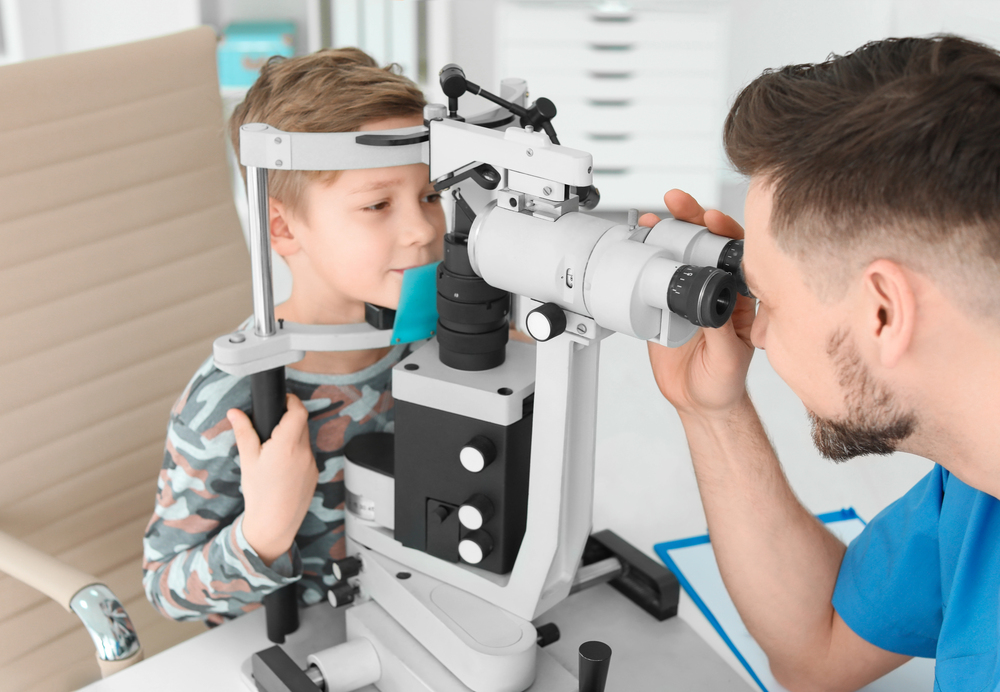
You want to protect your child's vision, but figuring out when they need their first eye exam or whether school screenings are enough can feel confusing. Good vision is critical for learning, sports, and development, yet many childhood vision problems go undetected because kids don't realize anything is wrong.
Pediatric eye care in Tulsa provides comprehensive vision testing designed specifically for children, identifying problems that standard school screenings often miss. This guide covers when to schedule your child's first exam, warning signs to watch for, and how to find an optometrist who makes eye care a positive experience.
Why Children's Eye Exams Matter More Than You Think
Your child's vision directly affects their ability to learn. Studies show that 80% of what children learn in school is presented visually. When a child can't see the board clearly or struggles to focus on reading, they fall behind, not because they lack ability but because they can't see properly.
Vision problems don't just impact academics. Children with undiagnosed vision issues may avoid sports and physical activities, affecting their confidence and social development. They might struggle with hand-eye coordination, not because they're clumsy, but because their eyes aren't working together correctly.
Early detection changes everything. Most childhood vision conditions are highly treatable when caught early. Amblyopia (lazy eye), for example, responds best to treatment before age 7. After that window closes, correcting it becomes significantly harder.
When to Schedule Your Child's Eye Exams
The American Optometric Association recommends the following schedule for children's eye exams:
6 Months Old
First comprehensive exam to check for eye health, appropriate tracking, and focusing ability. Infants can't read an eye chart, but pediatric optometrists use specialized techniques to assess vision.
3 Years Old
Second exam to evaluate visual acuity, alignment, and eye health. This exam catches amblyopia, strabismus (eye turn), and refractive errors before they affect development.
Before Kindergarten (Age 5-6)
Essential pre-school exam ensures your child starts school with clear vision. This exam tests reading readiness and identifies any issues that could interfere with learning.
Every 1-2 Years Through School
Annual exams for children who wear glasses or have risk factors. Every two years for children with no vision problems or family history of eye disease.
Don't wait for a school screening to catch problems. These screenings miss up to 75% of children with vision issues.
Signs Your Child May Need Glasses
Children rarely complain about blurry vision because they don't know what clear vision should look like. Watch for these behavioral signs instead.
Reading and Schoolwork Indicators
- Holds books very close to face (closer than 8-10 inches)
- Complains of headaches after reading or screen time
- Loses place frequently while reading
- Uses finger to track lines of text
- Avoids reading or homework
Visual Behavior Patterns
- Sits too close to the TV consistently
- Squints to see distant objects
- Covers or closes one eye when looking at things
- Tilts head to see better
- Rubs eyes frequently (not just when tired)
Physical Signs
- One eye turns in or out (even occasionally)
- Eyes don't move together smoothly
- Drooping eyelid
- White or grayish spot in the pupil
- Excessive tearing or red, swollen eyes
Performance and Development
- Poor hand-eye coordination for their age
- Difficulty catching or hitting balls
- Clumsiness or frequent bumping into things
- Avoiding puzzles, coloring, or detailed activities
If you notice any of these signs, schedule a comprehensive eye exam right away. Many learning and behavior issues resolve once vision problems are corrected.
Common Childhood Vision Problems
Myopia (Nearsightedness)
Myopia means your child can see close objects clearly but distant objects appear blurry. It's increasingly common, affecting nearly 40% of children in the U.S. Myopia typically develops between ages 6-12 and often worsens until the late teens. Signs include squinting at the board, sitting close to the TV, and difficulty seeing street signs or sports plays.
Hyperopia (Farsightedness)
Farsightedness means distant objects are clearer than near objects, though young children can often compensate by straining their focusing muscles. This strain causes headaches, eye fatigue, and difficulty concentrating on reading or close work.
Astigmatism
Astigmatism causes blurred vision at all distances due to an irregularly shaped cornea. Children may not realize their vision is blurry since they've never seen clearly. Symptoms include headaches, eye strain, and squinting.
Amblyopia (Lazy Eye)
Amblyopia develops when the brain favors one eye over the other, causing reduced vision in the weaker eye. It affects 2-3% of children and requires early treatment to prevent permanent vision loss. Treatment works best before age 7-8, making early detection critical.
Strabismus (Eye Turn)
Strabismus occurs when eyes don't align properly. One eye may turn in (esotropia), out (exotropia), up, or down. It can be constant or intermittent and affects depth perception and visual development. Treatment may include glasses, vision therapy, or surgery.
School Vision Screenings vs Comprehensive Eye Exams
What School Screenings Miss
School screenings typically test only distance vision using a basic eye chart. This catches moderate to severe myopia but misses many other conditions:
- Farsightedness (hyperopia)
- Astigmatism
- Focusing and tracking problems
- Eye teaming and coordination issues
- Eye health problems
- Early signs of eye disease
Studies show school screenings fail to detect vision problems in 11-75% of children with issues. A child can pass a school screening and still have significant vision problems affecting learning.
What Comprehensive Exams Provide
A comprehensive pediatric eye exam evaluates visual acuity at near and far distances, refractive error, eye alignment and movement, focusing ability, binocular vision, depth perception, color vision, and internal and external eye health. Optometrists use specialized equipment and techniques not available in school settings.
Making Eye Exams Fun for Kids
Pediatric-friendly practices create welcoming spaces with toys, books, and colorful decor. Staff members are trained to work with children, using friendly language and explaining equipment in non-scary ways.
Before the appointment, explain that the doctor will check their eyes with special tools and games. Avoid mentioning anything scary or painful since eye exams are completely non-invasive for routine checkups. Schedule appointments when your child is typically well-rested, not during nap time.
Find a Pediatric-Friendly Optometrist in Tulsa
Clear, healthy vision gives children the foundation they need for learning, development, and confidence. Schedule your child's eye exam today.
Browse Eye Doctors