Finding time for eye care appointments gets harder when your work schedule fills every weekday hour. Downtown Tulsa optometrists solve this problem by placing comprehensive vision services within walking distance of office buildings, restaurants, and the Arts District. Schedule an eye exam during lunch, return to work in the same hour, and maintain your vision health without disrupting your productivity.
Downtown Tulsa Eyecare at 9 E 4th St serves professionals, residents, and visitors in the city's urban core with flexible scheduling, modern diagnostic equipment, and complete vision care from routine exams to urgent eye problems. Their 5.0 rating across 338 reviews reflects consistent patient satisfaction with thorough exams, clear communication, and convenient downtown access.
Why Choose a Downtown Tulsa Eye Doctor
Location Convenience That Saves Time
Downtown Tulsa Eyecare sits one block from Guthrie Green and within walking distance of most downtown office buildings, hotels, and residential towers. Park in nearby garages with validated parking, use street parking meters, or bike to your appointment using racks located on the same block.
This central location turns eye care from a half-day commitment into a lunch break appointment. Schedule your comprehensive eye exam between meetings, grab lunch at one of dozens of nearby restaurants, and return to your office before the afternoon rush.
Flexible Scheduling for Working Professionals
Traditional optometry hours conflict with typical work schedules, forcing patients to use vacation time or reschedule important meetings. Downtown eye doctors accommodate professional schedules with early morning appointments before 9 AM and evening slots after 5 PM.
Same-week appointments handle urgent vision concerns like eye infections, foreign body removal, sudden vision changes, or lost contact lenses. Call in the morning, get examined that afternoon, and resolve your eye problem without waiting days.
Walkable Access to Complete Eye Care
Downtown Tulsa Eyecare provides comprehensive optometry services in one location:
Routine Vision Care:
- Comprehensive eye health examinations with digital retinal imaging
- Eyeglass prescription updates using automated refraction technology
- Contact lens fittings including toric lenses for astigmatism
- Annual contact lens evaluations and prescription renewals
Medical Eye Care:
- Glaucoma screening and monitoring
- Diabetic retinopathy examinations
- Treatment of eye infections (pink eye, styes, blepharitis)
- Foreign body removal from cornea or conjunctiva
- Dry eye diagnosis and treatment plans
- Red eye evaluations and urgent care
Advanced Diagnostics:
- Optical coherence tomography (OCT) for retinal disease detection
- Corneal topography for specialty contact lens fitting
- Visual field testing for glaucoma monitoring
- Digital fundus photography for baseline eye health documentation
Downtown Tulsa Eye Care Technology and Services
Modern Diagnostic Equipment
Downtown Tulsa Eyecare uses state-of-the-art technology to detect eye diseases years before symptoms appear. Digital retinal imaging captures high-resolution photographs of the back of your eye, creating permanent records that track subtle changes over time. Optometrists compare current images to baseline photos from previous years, identifying early signs of macular degeneration, diabetic retinopathy, or glaucoma progression.
Automated refraction systems measure your prescription with computer precision, reducing exam time while improving accuracy. Patients with astigmatism or complex prescriptions benefit from digital measurements that capture subtle variations traditional methods miss.
Comprehensive Eye Health Evaluations
Every comprehensive eye exam includes evaluation of both vision quality and eye health. Your optometrist checks visual acuity at multiple distances, measures eye pressure to screen for glaucoma, examines the retina and optic nerve for disease, and assesses how well your eyes work together.
These thorough evaluations detect more than just vision problems. Blood vessels in the retina reveal signs of diabetes, high blood pressure, autoimmune disorders, and some cancers before other symptoms appear. Optometrists often identify systemic health issues during routine eye exams, prompting earlier medical intervention.
Contact Lens Fitting and Specialty Services
Downtown Tulsa Eyecare fits contact lenses for patients with simple and complex prescriptions. Standard soft lenses correct nearsightedness and farsightedness in most patients, while toric lenses address astigmatism with weighted designs that stay oriented properly on the eye.
Multifocal contact lenses help patients over 40 see clearly at all distances without reading glasses. The practice provides trial lenses and follow-up visits to ensure proper fit, comfort, and vision before ordering a full supply.
Emergency Eye Care for Downtown Workers
Eye emergencies happen without warning. Metal shavings from construction sites, chemical splashes, sudden vision loss, severe eye pain, or trauma from accidents require immediate professional evaluation. Downtown Tulsa Eyecare handles urgent eye problems during business hours, providing faster care than emergency rooms and more thorough examination than urgent care clinics.
Call ahead when possible, but walk-in urgent visits are accommodated based on severity. The practice prioritizes eye emergencies over routine appointments.
Insurance and Pricing for Downtown Tulsa Eye Exams
Vision Insurance Accepted
Downtown Tulsa Eyecare participates with major vision insurance plans including:
- VSP (Vision Service Plan)
- EyeMed
- Davis Vision
- UnitedHealthcare Vision
- Medicare (for covered services)
Most vision plans cover comprehensive eye exams annually or every two years with copays between $10 and $40. Contact lens exams typically have additional fees beyond basic exam coverage.
Medical Insurance for Eye Problems
Your medical insurance (not vision insurance) covers eye exams related to medical conditions or symptoms. Diabetic eye exams, glaucoma monitoring, treatment of eye infections or injuries, and evaluation of eye pain or vision changes bill to medical insurance.
Bring both vision and medical insurance cards to your appointment. The office staff determines which insurance provides better coverage based on your exam reason.
Out-of-Pocket Costs
Patients without vision insurance pay $75 to $200 for comprehensive eye exams depending on testing complexity. Contact lens fittings range from $100 to $150 including measurements and trial lenses.
The practice provides upfront cost estimates before services and accepts payment via cash, credit cards, HSA cards, and FSA cards.
What to Expect During Your Downtown Tulsa Eye Exam
Before Your Appointment
Arrive 10 minutes early to complete paperwork if you're a new patient. Bring your current glasses or contact lenses, a list of medications you take, and your insurance cards. Remove contact lenses before your exam if you're being fitted for new lenses.
Tell the optometrist about any vision changes you've noticed: blurred vision, difficulty seeing at night, eye strain, headaches, floaters, or flashes of light. Even minor symptoms provide important diagnostic clues.
The Examination Process
Your comprehensive eye exam takes 30 to 60 minutes and includes multiple tests:
Visual Acuity Testing measures how clearly you see at various distances using the familiar eye chart with letters decreasing in size.
Refraction Assessment determines your exact prescription for glasses or contacts. The optometrist uses a phoropter (the large instrument with multiple lenses) and asks you to compare lens pairs: "Which is clearer, one or two?"
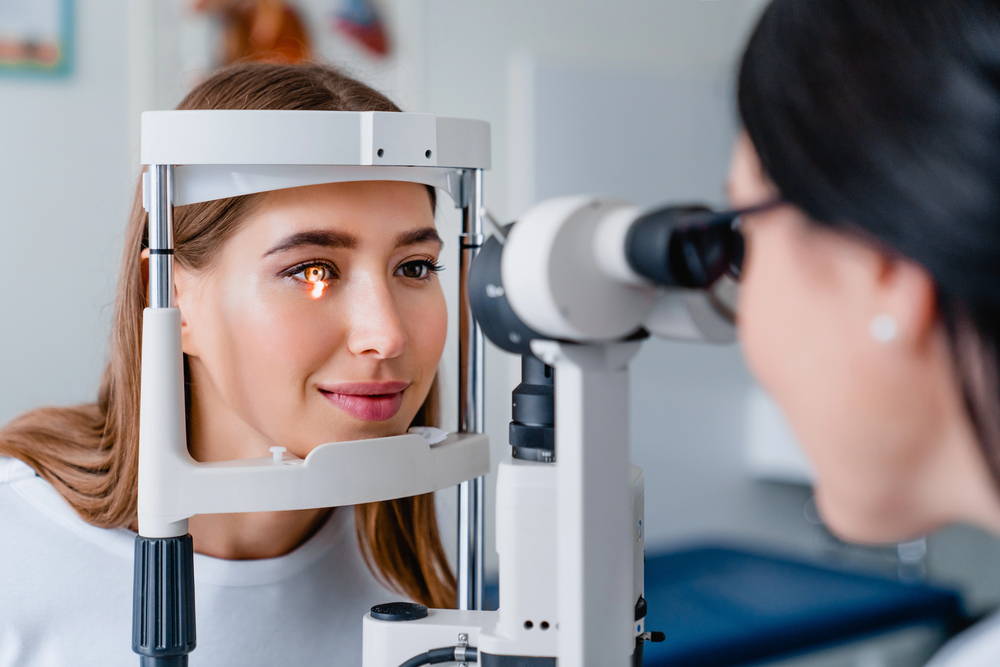
Eye Health Evaluation examines the external and internal structures of your eyes. The doctor uses a slit lamp (specialized microscope with bright light) to check for cataracts, corneal problems, and signs of dry eye.
Intraocular Pressure Measurement screens for glaucoma by measuring the pressure inside your eye. Most offices use the "puff of air" test (non-contact tonometry).
Retinal Examination evaluates the back of your eye including the retina, optic nerve, and blood vessels. Dilating drops may be used to widen your pupils for a complete view. Dilation effects last 4 to 6 hours, causing light sensitivity and difficulty focusing on close objects. Bring sunglasses if dilation is planned.
After Your Exam
Your optometrist explains all findings and answers questions before you leave. If you need new glasses or contacts, the office can help you choose frames or order lenses. Prescriptions are typically provided immediately unless dilation affects your vision too much to make accurate frame selections that day.
Parking and Accessibility in Downtown Tulsa
Parking Options Near Downtown Tulsa Eyecare
Validated Parking: The office validates parking in nearby garages. Ask about validation when scheduling your appointment.
Street Parking: Metered street parking is available on 4th Street and adjacent blocks. Most meters accept coins, cards, and mobile payment apps. Check time limits on meter signage.
Parking Garages: Multiple public parking garages sit within two blocks of the office, offering hourly and daily rates.
Bike Access: Bike racks are located on the same block as the office. Downtown Tulsa's bike lanes connect to the practice from residential neighborhoods and office districts.
Public Transportation Access
The Tulsa Transit Authority operates multiple bus routes through downtown with stops near 4th Street. Check current routes and schedules at tulsatransit.org.
Building Accessibility
The office location on the first floor of 9 E 4th St provides accessible entry for wheelchairs and mobility devices. Elevator access is available to the office suite.
Finding the Right Downtown Tulsa Optometrist
What Makes Downtown Tulsa Eyecare Stand Out
Proven Patient Satisfaction: The practice's 5.0 rating across 338 Google reviews reflects consistent positive experiences with exam thoroughness, staff professionalism, and clear communication.
Central Location: One block from Guthrie Green, walking distance from most downtown offices and residences, with multiple parking and transit options.
Comprehensive Services: Complete vision care from routine exams to urgent eye problems, eliminating the need to visit multiple providers.
Modern Technology: Digital imaging, automated refraction, and advanced diagnostic equipment provide more accurate results and earlier disease detection than traditional examination alone.
Flexible Hours: Early morning and evening appointments accommodate professional schedules without requiring time off work.
Comparing Downtown Eye Care Options
When choosing a downtown Tulsa optometrist, consider:
Location and Parking: How easy is it to reach the office from your workplace or home? What parking options are available and what do they cost?
Scheduling Flexibility: Does the practice offer early morning, evening, or same-day appointments? Can you book online or must you call?
Insurance Participation: Does the optometrist accept your specific vision or medical insurance plan? What are your expected out-of-pocket costs?
Services Offered: Does the practice provide the specific care you need, whether routine exams, specialty contact lenses, or treatment of eye conditions?
Technology and Equipment: Does the office use modern diagnostic equipment like digital retinal imaging and OCT scans?
Patient Reviews: What do other patients say about exam thoroughness, wait times, staff friendliness, and overall experience?
Comprehensive Eye Care Services Available Downtown
Routine Eye Exams and Vision Correction
Annual or biennial comprehensive eye exams form the foundation of vision health. These thorough evaluations update your prescription, screen for eye diseases, and detect signs of systemic health problems visible through the eyes.
Adults ages 18 to 64 with healthy eyes should have comprehensive exams every two years. Annual exams are recommended for people over 60, children and teens, contact lens wearers, people with diabetes or high blood pressure, and anyone with existing eye conditions.
Learn more about what happens during comprehensive eye exams and how often you should schedule them based on your age and health status.
Glaucoma Screening and Management
Glaucoma gradually destroys peripheral vision without pain or obvious symptoms. By the time you notice vision loss, permanent damage has occurred. Regular screening detects elevated eye pressure and optic nerve changes years before vision loss begins, allowing early treatment to prevent blindness.
Downtown Tulsa Eyecare performs glaucoma screening during routine comprehensive exams and provides ongoing monitoring for patients at risk or diagnosed with the condition.
Diabetic Eye Exams
Diabetes damages blood vessels throughout the body, including the tiny vessels in the retina. Diabetic retinopathy is the leading cause of blindness among working-age adults, but early detection and treatment can prevent 95% of diabetes-related vision loss.
Anyone with diabetes needs annual dilated eye exams regardless of age or vision quality. Downtown Tulsa optometrists examine the retina for early signs of diabetic damage and coordinate care with your primary care physician or endocrinologist.
Contact Lens Fitting and Follow-Up Care
Contact lens fitting involves more than just knowing your eyeglass prescription. Your optometrist measures your cornea's curvature, evaluates your tear film quality, discusses your wearing schedule and lifestyle needs, and provides trial lenses to ensure comfort before ordering a supply.
Annual contact lens exams are necessary because contacts require precise fitting to avoid complications. Your optometrist checks lens fit, updates your prescription if needed, and evaluates your eye health to ensure contacts remain safe for your eyes.
Additional Eye Care Resources in Tulsa
Finding Eye Doctors Throughout Tulsa
Downtown Tulsa Eyecare serves the urban core, but comprehensive eye care is available throughout the metro area. Browse the complete Tulsa optometrists directory to find qualified eye doctors in your neighborhood, compare insurance acceptance, and read patient reviews.
The directory features board-certified optometrists across Tulsa, from family practices to specialized vision services, with detailed information about services, technology, and patient experiences.
Understanding Common Eye Conditions
Regular eye exams detect vision problems and eye diseases in early stages when treatment is most effective. Common conditions diagnosed during comprehensive exams include:
Refractive Errors: Nearsightedness, farsightedness, and astigmatism blur vision at various distances but are easily corrected with glasses or contact lenses.
Presbyopia: Age-related difficulty focusing on close objects affects everyone over 40. Multifocal lenses or reading glasses restore comfortable near vision.
Cataracts: Clouding of the eye's natural lens develops gradually with age. Modern cataract surgery is highly successful when the condition interferes with daily activities.
Glaucoma: Increased eye pressure damages the optic nerve over time. Early detection and treatment with drops, laser, or surgery preserve vision.
Macular Degeneration: Deterioration of the retina's center affects detailed vision needed for reading and driving. Treatment can slow progression in many patients.
Schedule Your Downtown Tulsa Eye Exam Today
Convenient downtown location, flexible scheduling, and comprehensive vision care make maintaining your eye health easier. Downtown Tulsa Eyecare provides thorough examinations using modern diagnostic equipment, treats urgent eye problems, and fits contact lenses for simple and complex prescriptions.
Whether you need a routine eye exam, updated glasses prescription, contact lens fitting, or evaluation of an eye concern, downtown Tulsa optometrists deliver quality care without requiring you to leave the city center.
Next Steps:
- Check your insurance coverage to understand your benefits and expected costs
- Call (918) 935-3500 to schedule your comprehensive eye exam at Downtown Tulsa Eyecare
- Plan your visit by identifying parking options and allowing 60 minutes for your appointment
- Prepare for your exam by bringing current glasses, contact lenses, medications list, and insurance cards
Don't wait for vision problems to worsen. Regular comprehensive eye exams protect your sight and detect health issues early when treatment is most effective. Schedule your downtown Tulsa eye exam today and experience convenient, professional vision care in the heart of the city.
Frequently Asked Questions About Downtown Tulsa Eye Care
Where is Downtown Tulsa Eyecare located?
Downtown Tulsa Eyecare is located at 9 E 4th St Suite 105, Tulsa, OK 74103, one block from Guthrie Green and within walking distance of most downtown office buildings and the Arts District. The office is accessible via street parking, nearby parking garages with validation, bike racks on the same block, and public transit routes.
What are the office hours for downtown eye doctors?
Downtown Tulsa Eyecare offers flexible scheduling including early morning and evening appointments to accommodate working professionals. Call (918) 935-3500 for current hours and to schedule your exam. Same-week appointments are available for urgent eye care needs.
Does Downtown Tulsa Eyecare accept walk-in appointments?
The practice prioritizes scheduled appointments but accommodates urgent eye problems like infections, injuries, foreign body removal, and sudden vision changes. Call ahead when possible so the staff can prepare for your arrival, but walk-in urgent visits are evaluated based on severity.
What insurance does Downtown Tulsa Eyecare accept?
Downtown Tulsa Eyecare is in-network with VSP, EyeMed, Davis Vision, UnitedHealthcare Vision, and Medicare for covered services. The office accepts both vision insurance for routine care and medical insurance for eye problems related to diabetes, injuries, infections, or symptoms. Bring both insurance cards to your appointment.
How much does an eye exam cost in downtown Tulsa?
Comprehensive eye exams at Downtown Tulsa Eyecare cost between $75 and $200 for patients without insurance, depending on testing complexity. Most vision insurance plans cover annual exams with copays of $10 to $40. Contact lens exams include additional fees of $100 to $150 for measurements and fitting beyond the basic comprehensive exam.
Can I get my eyes examined during my lunch break?
Yes, downtown Tulsa's central location makes lunch break eye exams practical. Most comprehensive exams take 30 to 60 minutes. Schedule your appointment at the beginning or middle of your lunch hour, allowing time to return to work. Same-block parking and nearby restaurants make the process efficient.
What should I bring to my downtown Tulsa eye exam?
Bring your current eyeglasses and contact lenses, a list of all medications and supplements you take, your vision and medical insurance cards, and a list of questions or concerns about your vision. If you're being fitted for new contact lenses, remove your current lenses before the exam. Bring sunglasses if your eyes will be dilated.
Does Downtown Tulsa Eyecare treat eye emergencies?
Downtown Tulsa Eyecare handles urgent eye problems during business hours including eye infections, foreign body removal, sudden vision changes, eye injuries, and severe pain. Call ahead when possible, though walk-in urgent visits are accommodated based on severity. The practice provides more thorough examination than urgent care clinics and faster service than emergency rooms for eye-specific problems.
How often should I schedule eye exams in downtown Tulsa?
Adults ages 18 to 64 with healthy eyes need comprehensive exams every two years. Annual exams are recommended for people over 60, children and teens, contact lens wearers, people with diabetes or high blood pressure, and anyone with existing eye conditions. Your optometrist may recommend more frequent visits based on your individual health needs.
Where can I park for my downtown Tulsa eye appointment?
Multiple parking options are available near Downtown Tulsa Eyecare at 9 E 4th St. The office provides validated parking in nearby garages (ask when scheduling). Street parking meters accept coins, cards, and mobile apps. Public parking garages within two blocks offer hourly and daily rates. Bike racks are located on the same block for cyclists.
View All Tulsa Optometrists
Browse the complete directory of eye doctors across the Tulsa metro area.
Full Directory